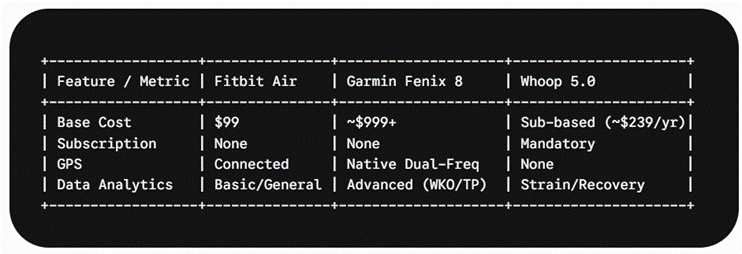
Over the past six weeks, I have put the new Fitbit Air through a rigorous trial, evaluating its performance alongside the established benchmarks in peripheral biometric tracking: the Garmin Fenix 8 and the Whoop 5.0.
When analyzing wearable tech for athletic application, we look at data fidelity, algorithm transparency, platform integration, and hardware reliability. Here is how the Fitbit Air measures up from a professional coaching perspective.
The most compelling argument for the Fitbit Air is its $99 purchase price with zero subscription fees. In a market where continuous physiological monitoring usually requires an ongoing monthly commitment (such as Whoop’s subscription model), an entry barrier this low is a welcome shift for general consumer accessibility.
The device syncs natively via the Google Health App. For basic daily metrics — resting heart rate, fundamental sleep architecture (light, deep, REM), and baseline activity tracking — the platform delivers stable, solid data.
However, when evaluated through an applied sport science lens, the platform feels distinctly light. Google Health provides high-level health summaries, but it currently lacks the deep contextual engine, customizable data fields, and recovery/load-trend modeling native to Garmin Connect or the Whoop app.
A peripheral tracker must first do no harm and ideally disappear on the athlete. Unfortunately, hardware execution is where the Fitbit Air struggled during testing:
From a performance standpoint, we must segment athletes based on their analytical requirements:
For an individual training for their first 5k race, the Fitbit Air is more than sufficient. It accurately captures total volume, basic cardiovascular response, and fundamental sleep duration. At $99, it provides actionable awareness without unnecessary technical complexity.
For structured periodization, physiological strain analysis, and high-performance load monitoring, Garmin and Whoop remain several levels ahead:
The Takeaway: The Fitbit Air is a solid, budget-conscious option for general health awareness, everyday step tracking, and novice event preparation.
However, for dedicated athletes and coaching staff requiring precise bio-feedback, high sampling rates during intense interval work, durable hardware, and deep performance analytics, investment in high-tier platforms like Garmin or Whoop remains essential.